Question 1 of 40Road signs
Practice test 2 of 10 — Virginia permit test
Practice test 2 questions
Question 2 of 40Road signs
A blue sign with a white "H" tells you:
Question 3 of 40Road signs
At a Virginia rail crossing you see a hazard on the tracks. An emergency sign there lists a phone number. What should you do?
Question 4 of 40Road signs
A sign says "SLOWER TRAFFIC KEEP RIGHT". What does it mean?
Question 5 of 40Road signs
Why do stop and yield signs have shapes no other sign uses?
Question 6 of 40Road signs
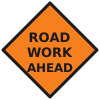
What does this orange sign tell you?
Question 7 of 40Road signs
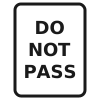
What does this sign mean?
Question 8 of 40Road signs
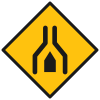
What should you expect after this sign?
Question 9 of 40Road signs
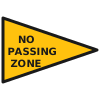
This pennant-shaped sign is on the left side of the road. What does it mark?
Question 10 of 40Road signs · Signals and pavement markings
In Virginia, what does a solid white line between lanes going the same way tell you?
Question 11 of 40General knowledge · Safe driving and hazards
You need to make a phone call while driving. What is the safest choice?
Question 12 of 40General knowledge · Speed and following distance
The Virginia manual sets following gaps by speed band. At 40 mph on a dry road, how many seconds behind the car ahead should you stay?
Question 13 of 40General knowledge · Alcohol, drugs and penalties
What kind of drug is alcohol?
Question 14 of 40General knowledge · Speed and following distance
In Virginia, above what speed can you be charged with reckless driving no matter what the limit is?
Question 15 of 40General knowledge · Alcohol, drugs and penalties
A Virginia driver refuses a breath test and is charged with a first DUI. How long is the automatic license suspension?
Question 16 of 40General knowledge · Safe driving and hazards
Why should you keep your windshield clean?
Question 17 of 40General knowledge · Sharing the road
What are the "no zones" around a large truck?
Question 18 of 40General knowledge · Safe driving and hazards
In Virginia, when must you turn on your headlights during the day?
Question 19 of 40General knowledge · Safe driving and hazards
Bright sun is shining in your eyes. What can help?
Question 20 of 40General knowledge · Safe driving and hazards
Why should you never leave a child alone in a parked car?
Question 21 of 40General knowledge · Sharing the road
How much of the lane does a motorcycle need?
Question 22 of 40General knowledge · Turning, passing and lanes
A long line of cars is behind you on a two-lane road. What should you do?
Question 23 of 40General knowledge · Emergencies and equipment
You are in a crash and someone is hurt. What should you do?
Question 24 of 40General knowledge · Speed and following distance
What does a minimum speed limit on a highway help prevent?
Question 25 of 40General knowledge · Speed and following distance
On a highway, what is the safest speed in good conditions?
Question 26 of 40General knowledge · Speed and following distance
Why does the risk of hydroplaning go up as you drive faster?
Question 27 of 40General knowledge · Alcohol, drugs and penalties
What usually happens if you refuse a lawful breath or blood test?
Question 28 of 40General knowledge · Turning, passing and lanes
What is the acceleration lane on a highway on-ramp for?
Question 29 of 40General knowledge · Alcohol, drugs and penalties
Which is a common penalty for a first conviction of driving under the influence?
Question 30 of 40General knowledge · Right of way
Two cars arrive at a four-way stop at the same time. The car on your right wants to turn left. Who goes first?
Question 31 of 40General knowledge · Safe driving and hazards
The back of your car starts to skid. What should you do?
Question 32 of 40General knowledge · Speed and following distance
In a 65 mph zone in Virginia, you are convicted of driving 83 mph. What extra fine does the law add?
Question 33 of 40General knowledge · Sharing the road
You want to pass a cyclist on a narrow road with oncoming cars. What should you do?
Question 34 of 40General knowledge · Sharing the road
A Virginia lane is too narrow to give a cyclist 3 feet when you pass. What must you do?
Question 35 of 40General knowledge · Alcohol, drugs and penalties
What kinds of tests are covered by implied consent laws?
Question 36 of 40General knowledge · Alcohol, drugs and penalties
You drank a lot late last night. Could you still be impaired the next morning?
Question 37 of 40General knowledge · Speed and following distance
School zone lights are flashing and children are near. What should you do?
Question 38 of 40General knowledge · Speed and following distance
When is the best time to slow down for a curve?
Question 39 of 40General knowledge · Speed and following distance
In Virginia, driving how far over the speed limit can get you charged with reckless driving?
Question 40 of 40General knowledge · Speed and following distance
Driving well over the limit on a short trip usually:
1 of 40
Answer each question to see the explanation. Keyboard: A–D or 1–4 to answer, N next, P previous.
Answers and explanations (text version)
The correct answer to each question above, why it is right, and where it comes from. Try the test first.
Question 1: A. A no-passing zone
The pennant shape is used only to mark the start of a no-passing zone.
Handbook: Chapter: Traffic signs — Sign shapes and colors
Question 2: C. A hospital is nearby
A blue sign with a white "H" points the way to a nearby hospital.
Handbook: Chapter: Traffic signs — Guide and service signs
Question 3: B. Call it and give the posted crossing number
Calling the number on the emergency sign lets the rail company stop or reroute trains; give the posted crossing number so the site is known.
Handbook: Section 2: Signals, Signs and Pavement Markings — Warning Signs
Question 4: B. Slower drivers should use the right lane
If you are driving slower than other traffic, keep to the right lane so faster cars can pass on the left.
Handbook: Chapter: Traffic signs — Regulatory signs
Question 5: A. So drivers can tell them apart even from behind
Their unique shapes let drivers tell what they are even when the front is covered by snow or seen from behind.
Handbook: Chapter: Traffic signs — Sign shapes and colors
Question 6: B. There is road work ahead, so slow down
Orange signs are for work zones. This one warns of road work ahead, so slow down and stay alert.
Handbook: Chapter: Traffic signs — Work zone signs
Question 7: A. You may not pass other vehicles here
This sign means do not pass. You must not pass other vehicles on this part of the road.
Handbook: Chapter: Traffic signs — Regulatory signs
Question 8: A. Oncoming traffic with no median between you
This sign warns that the divided highway ends. Oncoming traffic will share the road with no median between you.
Handbook: Chapter: Traffic signs — Warning signs
Question 9: C. The start of a no-passing zone
The pennant sign marks the start of a no-passing zone. Do not begin to pass from this point on.
Handbook: Chapter: Traffic signs — Warning signs
Question 10: A. Lane changes are discouraged here
Virginia uses solid white lines to discourage lane changes near intersections, ramps and other places where lane changes might be dangerous.
Handbook: Section 2: Signals, Signs and Pavement Markings — Pavement Markings
Question 11: A. Pull over to a safe place first
Pull over to a safe place before using your phone, since calls take your mind off driving.
Handbook: Chapter: Safe driving and hazards — Distracted driving
Question 12: B. 3 seconds
The manual table gives "2 seconds Under 35 MPH", "3 seconds 35-45 MPH" and "4 seconds 46-70 MPH", so 40 mph calls for 3 seconds.
Handbook: Section 3: Safe Driving — Following Distance
Question 13: B. A depressant that slows the brain
Alcohol is a depressant. It slows the brain and the body's reactions.
Handbook: Chapter: Alcohol, drugs and penalties — How alcohol affects you
Question 14: C. 85 mph
An officer may charge reckless driving for going 20 mph or more over the limit "or over 85 MPH ... regardless of the speed limit."
Handbook: Section 3: Safe Driving — Speed Limits
Question 15: B. 7 days
Refusing a breath test or having a BAC of .08 or more when charged with DUI brings an automatic suspension of 7 days for a first offense.
Handbook: Section 5: Penalties — Administrative License Suspension
Question 16: A. Dirt and glare make it harder to see
A dirty windshield adds glare and makes it harder to see, most of all at night.
Handbook: Chapter: Safe driving and hazards — Night and weather
Question 17: D. Blind spots where the driver cannot see you
No zones are the large blind spots around a truck where the driver cannot see you.
Handbook: Chapter: Sharing the road — Large trucks and buses
Question 18: A. When you use your wipers due to bad weather
Virginia requires headlights whenever you use your windshield wipers because of bad weather.
Handbook: Section 3: Safe Driving — Lights
Question 19: C. Use the sun visor and slow down
Use the sun visor or sunglasses and slow down until you can see clearly.
Handbook: Chapter: Safe driving and hazards — Night and weather
Question 20: B. The car can get too hot very quickly
A parked car can get too hot very quickly, even on a mild day, and a child left inside can die.
Handbook: Chapter: Safe driving and hazards — Defensive driving
Question 21: B. The full width of a lane
A motorcycle needs the full width of a lane. Never share a lane with one.
Handbook: Chapter: Sharing the road — Motorcycles
Question 22: B. Pull over where safe and let them pass
If a long line forms behind you, pull over where it is safe and let them pass.
Handbook: Chapter: Turning, passing and lane use — Lane use
Question 23: D. Stop, call 911, and help if you can
Stop, call 911, and give help you are able to give. Do not move injured people unless they are in danger.
Handbook: Chapter: Emergencies and vehicle equipment — Crashes
Question 24: C. Crashes caused by big speed gaps
A minimum speed limit keeps very slow cars off the highway, since big speed gaps lead to crashes.
Handbook: Chapter: Speed and following distance — Special speed zones
Question 25: D. Near the flow of traffic, within the limit
Driving near the flow of traffic, within the limit, keeps you from being passed often or passing too much.
Handbook: Chapter: Speed and following distance — Basic speed rule
Question 26: D. Your tires cannot push water away fast enough
At higher speed, tires cannot clear the water fast enough and can ride up on a thin layer of it.
Handbook: Chapter: Speed and following distance — Speed and road conditions
Question 27: B. Your license can be suspended
Under implied consent laws, refusing a lawful test usually leads to a license suspension.
Handbook: Chapter: Alcohol, drugs and penalties — Testing and implied consent
Question 28: A. To speed up to match highway traffic
Use the acceleration lane to get up to the speed of highway traffic so you can merge smoothly.
Handbook: Chapter: Turning, passing and lane use — Highway driving
Question 29: B. License suspension
A first conviction for driving under the influence commonly leads to license suspension, along with fines.
Handbook: Chapter: Alcohol, drugs and penalties — Penalties
Question 30: A. The car on your right
When two cars arrive at the same time, the car on the right goes first, no matter which way it is turning.
Handbook: Chapter: Right of way — Stop signs and intersections
Question 31: A. Ease off the gas and steer where you want to go
In a skid, ease off the gas and steer gently where you want the car to go.
Handbook: Chapter: Safe driving and hazards — Skids and slippery roads
Question 32: C. $100
The manual says you face "an additional $100 fine if convicted of driving between 81 and 85 MPH in a 65-MPH zone."
Handbook: Section 3: Safe Driving — Speed Limits
Question 33: A. Wait behind until you can pass safely
Wait behind the cyclist until there is room to pass safely with plenty of space.
Handbook: Chapter: Sharing the road — Bicycles
Question 34: A. Change lanes to pass
If the lane is not wide enough for a three-foot gap, Virginia law says you must change lanes to pass safely.
Handbook: Section 3: Safe Driving — Sharing the Road
Question 35: D. Breath, blood, or urine tests
Implied consent laws generally cover breath, blood and urine tests for alcohol or drugs.
Handbook: Chapter: Alcohol, drugs and penalties — Testing and implied consent
Question 36: A. Yes, alcohol can still be in your blood
Yes. After heavy drinking, alcohol can still be in your blood the next morning, even after sleep.
Handbook: Chapter: Alcohol, drugs and penalties — How alcohol affects you
Question 37: D. Slow to the school limit and watch for children
In an active school zone, slow to the posted school zone limit and watch closely for children.
Handbook: Chapter: Speed and following distance — Special speed zones
Question 38: B. Before you enter the curve
Slow down before the curve, then keep a steady speed through it. Braking in the curve can cause a skid.
Handbook: Chapter: Speed and following distance — Speed and road conditions
Question 39: D. 20 mph or more over
An officer may charge you with reckless driving if you go 20 mph or more over the limit, which is a criminal misdemeanor.
Handbook: Section 3: Safe Driving — Speed Limits
Question 40: A. Saves very little time and adds a lot of risk
Speeding on most trips saves only a few minutes but raises the chance and harm of a crash.
Handbook: Chapter: Speed and following distance — Basic speed rule
Practice test 2 of 10 for the Two-part knowledge exam (traffic signs and general knowledge) (Virginia DMV): 40 questions · 34 of 40 (10 of 10 road signs and 24 of 30 general knowledge) to pass · no time limit.