Question 1 of 25Safe driving and hazards
Practice test 1 of 10 — West Virginia permit test
Practice test 1 questions
Question 2 of 25Emergencies and equipment
Your car stalls on the railroad tracks and a train is coming. What should you do?
Question 3 of 25Right of way (West Virginia)
According to the West Virginia handbook, does the law require you to yield to a funeral procession?
Question 4 of 25Road signs
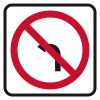
What is not allowed where this sign is posted?
Question 5 of 25Safe driving and hazards
Which headlights should you use in fog?
Question 6 of 25Speed and following distance (West Virginia)
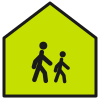
According to the West Virginia handbook, what is the speed limit in a school zone while children are present?
Question 7 of 25Sharing the road
Why might a motorcyclist suddenly change position in their lane?
Question 8 of 25Road signs
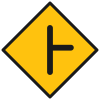
What should you expect after you pass this sign?
Question 9 of 25Emergencies and equipment (West Virginia)
The West Virginia handbook gives an order for first aid at a crash. What comes first?
Question 10 of 25Parking and stopping (West Virginia)
When you parallel park on a West Virginia street, how close to the curb must your wheels be?
Question 11 of 25Right of way
You are in a roundabout and an emergency vehicle with a siren comes up. What should you do?
Question 12 of 25Speed and following distance
Compared to dry pavement, stopping on ice takes:
Question 13 of 25Road signs
Yellow signs with black symbols are used to:
Question 14 of 25Right of way
At a four-way stop, you and an oncoming car stop at the same time. You want to turn left; they are going straight. Who goes first?
Question 15 of 25Signals and pavement markings
There is a solid yellow line on your side of the center and a broken yellow line on the far side. May you pass?
Question 16 of 25Turning, passing and lanes
You miss your exit on the highway. What should you do?
Question 17 of 25Signals and pavement markings
A steady yellow X appears over your lane. What does it mean?
Question 18 of 25Parking and stopping
How should you start to parallel park?
Question 19 of 25Road signs
Signs that are taller than they are wide, in white with black letters, usually:
Question 20 of 25Safe driving and hazards
How can you let other drivers know what you plan to do?
Question 21 of 25Safe driving and hazards
How far should you sit from the airbag in the steering wheel?
Question 22 of 25Safe driving and hazards (West Virginia)
In West Virginia, when must you dim your high beams for an oncoming car?
Question 23 of 25Safe driving and hazards (West Virginia)
According to the West Virginia handbook, what is the penalty for a first offense of using a hand-held phone while driving?
Question 24 of 25Alcohol, drugs and penalties
How does a conviction for driving under the influence usually affect insurance?
Question 25 of 25Right of way
Two cars arrive at a four-way stop at the same time. The car on your right wants to turn left. Who goes first?
1 of 25
Answer each question to see the explanation. Keyboard: A–D or 1–4 to answer, N next, P previous.
Answers and explanations (text version)
The correct answer to each question above, why it is right, and where it comes from. Try the test first.
Question 1: A. Dirt and glare make it harder to see
A dirty windshield adds glare and makes it harder to see, most of all at night.
Handbook: Chapter: Safe driving and hazards — Night and weather
Question 2: A. Get out and walk away at an angle toward the train
Get out at once and walk away from the tracks at an angle toward the train, so debris thrown forward in the crash will not hit you.
Handbook: Chapter: Emergencies and vehicle equipment — Railroad emergencies
Question 3: B. No, but yielding to it is a courtesy
The handbook says that "although not required by law, it is a courtesy to yield" to a funeral procession.
Handbook: Chapter VI: Traffic Laws and Rules of the Road — Right-of-Way
Question 4: D. Turning left
This sign bans left turns. You may go straight or turn right if those moves are allowed.
Handbook: Chapter: Traffic signs — Regulatory signs
Question 5: C. Low beams
Use low beams in fog. High beams reflect off the fog and make it harder to see.
Handbook: Chapter: Safe driving and hazards — Night and weather
Question 6: C. 15 mph
The limit in a "School Zone (while children are present along the roadway)" is 15mph (15 mph).
Handbook: Chapter VI: Traffic Laws and Rules of the Road — Speed Limits
Question 7: D. To avoid hazards like potholes or gravel
Potholes, gravel and wet patches are more dangerous on a motorcycle, so riders may move to avoid them.
Handbook: Chapter: Sharing the road — Motorcycles
Question 8: A. Cars may enter from a road on the right
This side road sign warns that a road joins from the right, so cars may enter your road.
Handbook: Chapter: Traffic signs — Warning signs
Question 9: D. Control bleeding
The handbook lists the first aid steps in order, starting with "Control bleeding," then restoring breathing, shock and broken bones.
Handbook: Chapter IX: Emergency Situations — First Aid
Question 10: B. Within 18 inches
Park so the wheels are parallel to "and within 18 inches of the right curb" (18 inches).
Handbook: Chapter VI: Traffic Laws and Rules of the Road — Parallel Parking (§17C-13-4, W. Va. State Code)
Question 11: B. Leave at the next exit, then pull over
Do not stop inside a roundabout. Leave at your exit or the next one, then pull over to let the vehicle pass.
Handbook: Chapter: Right of way — Emergency vehicles
Question 12: A. Much longer
Ice gives your tires very little grip, so stopping takes much longer than on dry pavement.
Handbook: Chapter: Speed and following distance — Speed and road conditions
Question 13: B. Warn you about the road ahead
Yellow is the color of general warning signs. They tell you about curves, crossings and other hazards ahead.
Handbook: Chapter: Traffic signs — Sign shapes and colors
Question 14: B. The car going straight
A driver turning left yields to an oncoming car going straight, so let it go first.
Handbook: Chapter: Right of way — Stop signs and intersections
Question 15: C. No; only oncoming drivers may pass here
A solid yellow line on your side means you may not cross it to pass. The broken line lets oncoming drivers pass.
Handbook: Chapter: Traffic signals and pavement markings — Pavement markings
Question 16: C. Go on to the next exit
Never back up or turn around on a highway. Drive on to the next exit.
Handbook: Chapter: Turning, passing and lane use — Highway driving
Question 17: D. Get ready to leave the lane safely
A steady yellow X means the lane will soon close. Get ready to leave the lane safely.
Handbook: Chapter: Traffic signals and pavement markings — Lane control signals
Question 18: A. Pull up beside the car in front of the space
Signal, then pull up alongside the car in front of the space before you start to back in.
Handbook: Chapter: Parking and stopping — Parallel parking
Question 19: C. Give a rule you must obey
Upright white rectangles are regulatory signs, such as speed limits. They give a rule you must obey.
Handbook: Chapter: Traffic signs — Sign shapes and colors
Question 20: D. Use your signals and brake lights
Signals, brake lights and eye contact tell other drivers and people walking what you plan to do.
Handbook: Chapter: Safe driving and hazards — Defensive driving
Question 21: D. At least 10 inches
Sit at least 10 inches from the steering wheel so a deploying airbag does not hurt you.
Handbook: Chapter: Safe driving and hazards — Seat belts and airbags
Question 22: B. When it is within 500 feet
At night, "dim your headlights within 500 feet of an approaching vehicle" (500 feet).
Handbook: Chapter VI: Traffic Laws and Rules of the Road — Headlights and Their Use
Question 23: D. A $100 fine and no points
The handbook lists "First offense = $100 fine and zero (0) points" for this violation.
Handbook: Chapter II: Driver Responsibilities — The Use of Communication Devices While Operating a Motor Vehicle
Question 24: B. Insurance costs go up
Insurance costs usually go up a lot after a conviction for driving under the influence.
Handbook: Chapter: Alcohol, drugs and penalties — Penalties
Question 25: A. The car on your right
When two cars arrive at the same time, the car on the right goes first, no matter which way it is turning.
Handbook: Chapter: Right of way — Stop signs and intersections
Practice test 1 of 10 for the Knowledge Examination (Level 1 GDL / Class E instruction permit) (WV DMV): 25 questions · 19 of 25 (76%) to pass · no time limit.