Question 1 of 25Sharing the road
Practice test 2 of 10 — West Virginia permit test
Practice test 2 questions
Question 2 of 25Right of way
You are turning left into a driveway across the oncoming lane. Who must you yield to?
Question 3 of 25Right of way (West Virginia)
You are merging onto a West Virginia interstate from the entrance ramp. Who has the right of way?
Question 4 of 25Road signs

You come to this sign. There is no stop line and no crosswalk. Where should you stop?
Question 5 of 25Alcohol, drugs and penalties
What happens when you mix alcohol with other drugs?
Question 6 of 25Speed and following distance (West Virginia)
Unless another limit is posted, what is the speed limit in West Virginia business or residential areas?
Question 7 of 25Sharing the road
How should you pass a person riding a horse?
Question 8 of 25Road signs
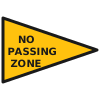
This pennant-shaped sign is on the left side of the road. What does it mark?
Question 9 of 25Licensing and insurance (West Virginia)
During the first six months, which passengers may a West Virginia Level 2 driver not carry?
Question 10 of 25Turning, passing and lanes (West Virginia)
You reach the end of a West Virginia interstate acceleration lane and still find no gap. What does the handbook allow as a last resort?
Question 11 of 25Turning, passing and lanes
Where is a U-turn most likely to be unsafe or not allowed?
Question 12 of 25Parking and stopping
Your car is parked on a downhill slope beside a curb. How should the front wheels point?
Question 13 of 25Road signs
A stop sign has a small plaque below it that says "ALL WAY". What does this mean?
Question 14 of 25Speed and following distance
When is the best time to slow down for a curve?
Question 15 of 25Right of way
You are at a stop sign and want to turn left. Cross traffic does not stop. What do you need before you go?
Question 16 of 25Parking and stopping
May you park so that you block a driveway?
Question 17 of 25Road signs
A sign says "SOFT SHOULDER". What should you do?
Question 18 of 25Alcohol, drugs and penalties
In nearly every state, what is the legal blood alcohol limit for drivers 21 and over?
Question 19 of 25Road signs

A crossing has only this sign, with no lights or gates. What should you do?
Question 20 of 25Sharing the road
When are cyclists hardest for drivers to see?
Question 21 of 25Safe driving and hazards
Why is texting while driving so dangerous?
Question 22 of 25Emergencies and equipment (West Virginia)
In West Virginia, a child under 8 may use a seat belt instead of a child safety seat once the child is how tall?
Question 23 of 25Alcohol, drugs and penalties (West Virginia)
According to the West Virginia handbook, a BAC above what level, but below 0.08 percent, is evidence that a driver may be impaired?
Question 24 of 25Alcohol, drugs and penalties
Your doctor gives you a new medicine. What should you do before driving?
Question 25 of 25Speed and following distance
When you are stopped behind another car, how much space should you leave?
1 of 25
Answer each question to see the explanation. Keyboard: A–D or 1–4 to answer, N next, P previous.
Answers and explanations (text version)
The correct answer to each question above, why it is right, and where it comes from. Try the test first.
Question 1: A. When its whole front shows in your mirror
Wait until you can see the whole front of the truck in your mirror before moving in front of it.
Handbook: Chapter: Sharing the road — Large trucks and buses
Question 2: C. Oncoming traffic and people on the sidewalk
When you turn left across traffic into a driveway, yield to oncoming traffic and to people on the sidewalk you will cross.
Handbook: Chapter: Right of way — Turning at intersections
Question 3: D. Traffic already on the interstate
When you enter, remember that "traffic on the interstate has the right-of-way" and others may not move over.
Handbook: Chapter VII: Driving on Interstates — Entering an Interstate
Question 4: B. Before you enter the intersection, where you can see
With no stop line or crosswalk, stop before you enter the intersection at a point where you can see traffic coming.
Handbook: Chapter: Traffic signs — Regulatory signs
Question 5: D. The effects can be much stronger
Alcohol mixed with other drugs can make the effects much stronger and more dangerous.
Handbook: Chapter: Alcohol, drugs and penalties — Drugs and medicine
Question 6: B. 25 mph
The designated limit for "Business or Residential Areas" is 25mph (25 mph) unless otherwise posted.
Handbook: Chapter VI: Traffic Laws and Rules of the Road — Speed Limits
Question 7: B. Slowly, with plenty of room and no horn
Pass a horse slowly and give it plenty of room. Do not honk, as noise can scare it.
Handbook: Chapter: Sharing the road — Slow-moving vehicles
Question 8: C. The start of a no-passing zone
The pennant sign marks the start of a no-passing zone. Do not begin to pass from this point on.
Handbook: Chapter: Traffic signs — Warning signs
Question 9: B. Non-family passengers under 20
In the first six months, a Level 2 driver may not carry "any non-family members under the age of 20" as passengers.
Handbook: Chapter I: Driver's License Information — Level 2 GDL Intermediate Driver's License
Question 10: A. Drive onto the shoulder past the lane and stop
If no gap is open, you may need to drive onto the shoulder "beyond the end of the acceleration lane and stop."
Handbook: Chapter VII: Driving on Interstates — Entering an Interstate
Question 11: C. Near a curve or hill where others cannot see you
Do not make a U-turn near a curve or hill, where drivers cannot see you in time to stop.
Handbook: Chapter: Turning, passing and lane use — Turns
Question 12: D. Toward the curb
Facing downhill, turn the wheels toward the curb so the car rolls into the curb, not into traffic.
Handbook: Chapter: Parking and stopping — Parking on hills
Question 13: A. Traffic from every direction must stop
An all-way plaque means traffic from every direction must stop at the intersection.
Handbook: Chapter: Traffic signs — Regulatory signs
Question 14: B. Before you enter the curve
Slow down before the curve, then keep a steady speed through it. Braking in the curve can cause a skid.
Handbook: Chapter: Speed and following distance — Speed and road conditions
Question 15: B. A safe gap in traffic from both ways
When turning left onto a road where traffic does not stop, you cross both lanes, so you need a safe gap from both ways.
Handbook: Chapter: Right of way — Stop signs and intersections
Question 16: A. No, it is not allowed
Do not park across a driveway. It keeps people from getting in or out.
Handbook: Chapter: Parking and stopping — Where not to park
Question 17: A. Avoid driving on the edge of the road
A soft shoulder sign means the edge of the road is loose or soft. Avoid driving onto the shoulder.
Handbook: Chapter: Traffic signs — Warning signs
Question 18: A. 0.08 percent
In nearly every state the limit for drivers 21 and over is 0.08 percent; a state may set it lower.
Handbook: Chapter: Alcohol, drugs and penalties — Legal limits
Question 19: D. Look both ways and stop if a train is near
Treat a crossbuck like a yield sign. Slow down, look and listen, and stop if a train is near.
Handbook: Chapter: Traffic signs — Regulatory signs
Question 20: A. At dusk, at night, and in bad weather
Cyclists are small and easy to miss at dusk, at night and in bad weather, so look harder for them then.
Handbook: Chapter: Sharing the road — Bicycles
Question 21: D. It takes your eyes and mind off the road
Texting takes your eyes, hands and mind off driving, which makes a crash much more likely.
Handbook: Chapter: Safe driving and hazards — Distracted driving
Question 22: D. At least 4 feet 9 inches
If a child under 8 is at least 4 feet 9 inches tall, "a safety belt shall be sufficient to meet the requirements."
Handbook: Chapter VIII: Defensive Driving — Safety Equipment
Question 23: D. 0.05 percent
A BAC of "more than 0.05 percent and less than 0.08 percent" is relevant evidence that driving is impaired.
Handbook: Chapter III: Driving Impaired or Under the Influence — Knowing Your Limits
Question 24: D. Read the label and ask if it affects driving
Many medicines can make you drowsy. Read the label and ask your doctor or pharmacist if it affects driving.
Handbook: Chapter: Alcohol, drugs and penalties — Drugs and medicine
Question 25: A. Enough to see its rear tires touch the road
If you can see the rear tires of the car ahead touching the road, you have room to steer around it.
Handbook: Chapter: Speed and following distance — Managing space
Practice test 2 of 10 for the Knowledge Examination (Level 1 GDL / Class E instruction permit) (WV DMV): 25 questions · 19 of 25 (76%) to pass · no time limit.