Question 1 of 65Road signs
Practice test 1 of 10 — Wisconsin permit test
Practice test 1 questions
Question 2 of 65Road signs
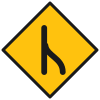
What does this sign warn you about?
Question 3 of 65Road signs
A white sign says "PASS WITH CARE". What does it mean?
Question 4 of 65Road signs
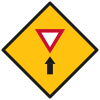
What does this sign warn you about?
Question 5 of 65Road signs
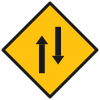
You are on a one-way street and see this sign. What does it mean?
Question 6 of 65Road signs
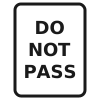
What does this sign mean?
Question 7 of 65Road signs
A blue sign with a white "H" tells you:
Question 8 of 65Road signs
Most diamond-shaped signs:
Question 9 of 65Road signs
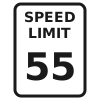
You pass this sign, but rain is falling hard and you cannot see well. What should you do?
Question 10 of 65Road signs
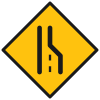
You are in the lane that this sign says will end. What should you do?
Question 11 of 65Road signs
A sign and a police officer at an intersection give you different orders. Whom do you obey?
Question 12 of 65Road signs
Why do stop and yield signs have shapes no other sign uses?
Question 13 of 65Road signs

A crossing has only this sign, with no lights or gates. What should you do?
Question 14 of 65Road signs
In Wisconsin, what does a county road sign look like?
Question 15 of 65Road signs
A sign says "SLOWER TRAFFIC KEEP RIGHT". What does it mean?
Question 16 of 65Rules of the road · Parking and stopping
How should you start to parallel park?
Question 17 of 65Rules of the road · Speed and following distance
When you are stopped behind another car, how much space should you leave?
Question 18 of 65Rules of the road · Right of way
At a four-way stop, you and an oncoming car stop at the same time. You want to turn left; they are going straight. Who goes first?
Question 19 of 65Rules of the road · Right of way
You are at a stop sign. The cross street has no stop sign. When may you go?
Question 20 of 65Rules of the road · Parking and stopping
When you finish parallel parking, where should your car be?
Question 21 of 65Rules of the road · Alcohol, drugs and penalties
Some cold medicines warn they may cause drowsiness. What does this mean for driving?
Question 22 of 65Rules of the road · Alcohol, drugs and penalties
In Wisconsin, how long is a habitual traffic offender's driving privilege revoked?
Question 23 of 65Rules of the road · Turning, passing and lanes
What is a blind spot?
Question 24 of 65Rules of the road · Parking and stopping
When you finish parallel parking in Wisconsin, about how far from the curb should your car be?
Question 25 of 65Rules of the road · Speed and following distance
Can you get a ticket for driving at the posted limit?
Question 26 of 65Rules of the road · Right of way
A person with a white cane or a guide dog is at a crossing. What should you do?
Question 27 of 65Rules of the road · Speed and following distance
If you double your speed, about how much farther do you travel once you brake?
Question 28 of 65Rules of the road · Right of way
In Wisconsin, a school bus is stopped with red lights flashing. How far from it must you stop?
Question 29 of 65Rules of the road · Right of way
You are leaving an alley and must cross a sidewalk. What should you do?
Question 30 of 65Rules of the road · Speed and following distance
Why should you drive slower on a gravel road?
Question 31 of 65Rules of the road · Safe driving and hazards
How far should you sit from the airbag in the steering wheel?
Question 32 of 65Rules of the road · Turning, passing and lanes
In what order should you change lanes?
Question 33 of 65Rules of the road · Right of way
In general, how should you treat a funeral procession?
Question 34 of 65Rules of the road · Signals and pavement markings
A center lane is marked with a solid yellow line and a broken yellow line on each side. What is it for?
Question 35 of 65Rules of the road · Right of way
You are in the middle of an intersection when an ambulance with a siren comes up behind you. What should you do?
Question 36 of 65Rules of the road · Speed and following distance
In Wisconsin, what is the top speed in outlying parts of cities and villages that have no posted limit?
Question 37 of 65Rules of the road · Signals and pavement markings
What must you do at a steady red traffic light?
Question 38 of 65Rules of the road · Sharing the road
When may a cyclist ride in the middle of a traffic lane?
Question 39 of 65Rules of the road · Right of way
You are coming up to a roundabout and someone is waiting at the crosswalk before it. What should you do?
Question 40 of 65Rules of the road · Safe driving and hazards
The headlights of an oncoming car are blinding you. Where should you look?
Question 41 of 65Rules of the road · Safe driving and hazards
What is an "escape route" when driving?
Question 42 of 65Rules of the road · Emergencies and equipment
A front tire blows out. What should you do?
Question 43 of 65Rules of the road · Alcohol, drugs and penalties
A Wisconsin occupational license lets you drive up to how many hours a week?
Question 44 of 65Rules of the road · Alcohol, drugs and penalties
What does "implied consent" mean?
Question 45 of 65Rules of the road · Right of way
A car is already in the intersection when you arrive. What should you do?
Question 46 of 65Rules of the road · Right of way
Which statement about the right-of-way is true?
Question 47 of 65Rules of the road · Speed and following distance
When should you leave more space between you and the car ahead?
Question 48 of 65Rules of the road · Parking and stopping
Which way should your car face when you park on a two-way street?
Question 49 of 65Rules of the road · Safe driving and hazards
You see children playing near the road ahead. What is a good step to take?
Question 50 of 65Rules of the road · Parking and stopping
In Wisconsin, where should your front wheels stop at a crosswalk marked with a solid white stop line?
Question 51 of 65Rules of the road · Emergencies and equipment
Your headlights suddenly go out at night. What should you do?
Question 52 of 65Rules of the road · Right of way
You are in a roundabout and an emergency vehicle with a siren comes up. What should you do?
Question 53 of 65Rules of the road · Emergencies and equipment
You see smoke coming from under the hood. What should you do?
Question 54 of 65Rules of the road · Speed and following distance
In Wisconsin, how should you change your following gap in rain, snow or heavy traffic?
Question 55 of 65Rules of the road · Parking and stopping
A police car signals you to pull over. What should you do?
Question 56 of 65Rules of the road · Right of way
A Wisconsin funeral procession reaches a traffic light. Which vehicle in the line must obey the signal?
Question 57 of 65Rules of the road · Speed and following distance
What is the "basic speed rule"?
Question 58 of 65Rules of the road · Emergencies and equipment
Your car breaks down on the highway. What should you do?
Question 59 of 65Rules of the road · Turning, passing and lanes
On a highway with several lanes, what is the left lane mainly for?
Question 60 of 65Rules of the road · Safe driving and hazards
Where should you look while you drive?
Question 61 of 65Rules of the road · Turning, passing and lanes
When joining a highway, what should you look for?
Question 62 of 65Rules of the road · Emergencies and equipment
Your brakes suddenly stop working. What should you do first?
Question 63 of 65Rules of the road · Speed and following distance
Why is following distance measured in seconds instead of feet?
Question 64 of 65Rules of the road · Speed and following distance
School zone lights are flashing and children are near. What should you do?
Question 65 of 65Rules of the road · Right of way
Two lanes merge into one. What is the best way to handle it?
1 of 65
Answer each question to see the explanation. Keyboard: A–D or 1–4 to answer, N next, P previous.
Answers and explanations (text version)
The correct answer to each question above, why it is right, and where it comes from. Try the test first.
Question 1: D. They tell people where you are in an emergency
Mile markers show your place on the highway, which helps you tell police or rescue workers where you are.
Handbook: Chapter: Traffic signs — Guide and service signs
Question 2: C. Another lane of traffic will join yours
The merge sign warns that traffic from another lane or ramp will join your lane ahead.
Handbook: Chapter: Traffic signs — Warning signs
Question 3: A. The no-passing zone has ended
A pass with care sign marks the end of a no-passing zone. You may pass again, but only when it is safe.
Handbook: Chapter: Traffic signs — Regulatory signs
Question 4: A. A yield sign is coming up
This sign warns of a yield sign ahead, so slow down and be ready to give way.
Handbook: Chapter: Traffic signs — Warning signs
Question 5: C. Traffic will soon come toward you on this road
The two-way traffic sign warns that oncoming traffic will soon use the same road as you.
Handbook: Chapter: Traffic signs — Warning signs
Question 6: A. You may not pass other vehicles here
This sign means do not pass. You must not pass other vehicles on this part of the road.
Handbook: Chapter: Traffic signs — Regulatory signs
Question 7: C. A hospital is nearby
A blue sign with a white "H" points the way to a nearby hospital.
Handbook: Chapter: Traffic signs — Guide and service signs
Question 8: B. Warn you of a hazard or change ahead
Diamond-shaped signs are warning signs. They tell you about a hazard or change in the road ahead.
Handbook: Chapter: Traffic signs — Sign shapes and colors
Question 9: D. Drive slower than the posted speed
The posted speed is the most you may drive in good conditions. In heavy rain you must drive slower than that to stay safe.
Handbook: Chapter: Traffic signs — Regulatory signs
Question 10: C. Signal and merge when there is a safe gap
When your lane ends, signal early and merge into the next lane when there is a safe gap.
Handbook: Chapter: Traffic signs — Warning signs
Question 11: C. The police officer
A police officer directing traffic overrides signs and signals, so follow the officer.
Handbook: Chapter: Traffic signs — Regulatory signs
Question 12: A. So drivers can tell them apart even from behind
Their unique shapes let drivers tell what they are even when the front is covered by snow or seen from behind.
Handbook: Chapter: Traffic signs — Sign shapes and colors
Question 13: D. Look both ways and stop if a train is near
Treat a crossbuck like a yield sign. Slow down, look and listen, and stop if a train is near.
Handbook: Chapter: Traffic signs — Regulatory signs
Question 14: A. A white rectangle with rounded edges
The Wisconsin county road sign "is rectangular with rounded edges" and is white with black letters.
Handbook: Section 4: Signs — G. Route Number
Question 15: B. Slower drivers should use the right lane
If you are driving slower than other traffic, keep to the right lane so faster cars can pass on the left.
Handbook: Chapter: Traffic signs — Regulatory signs
Question 16: A. Pull up beside the car in front of the space
Signal, then pull up alongside the car in front of the space before you start to back in.
Handbook: Chapter: Parking and stopping — Parallel parking
Question 17: A. Enough to see its rear tires touch the road
If you can see the rear tires of the car ahead touching the road, you have room to steer around it.
Handbook: Chapter: Speed and following distance — Managing space
Question 18: B. The car going straight
A driver turning left yields to an oncoming car going straight, so let it go first.
Handbook: Chapter: Right of way — Stop signs and intersections
Question 19: A. After stopping, when there is a safe gap
After you stop, yield to cross traffic that does not have to stop, and go only when there is a safe gap.
Handbook: Chapter: Right of way — Stop signs and intersections
Question 20: B. Close to and lined up with the curb
A parallel-parked car should sit close to the curb and lined up with it, not sticking out into traffic.
Handbook: Chapter: Parking and stopping — Parallel parking
Question 21: C. They can make driving unsafe
Medicines that cause drowsiness can slow your reactions and make driving unsafe.
Handbook: Chapter: Alcohol, drugs and penalties — Drugs and medicine
Question 22: A. Five years
A Wisconsin habitual traffic offender "will not be able to drive for five years."
Handbook: Section 11: Your Driving Privilege — B. Habitual Traffic Offender
Question 23: D. An area near your car your mirrors do not show
A blind spot is an area near your car that your mirrors do not show, so you must turn your head to check it.
Handbook: Chapter: Turning, passing and lane use — Changing lanes
Question 24: D. About a foot
At the end of a Wisconsin parallel park, "you should be about a foot away from the curb."
Handbook: Section 3: The Basics — J. Parking
Question 25: C. Yes, if that speed is unsafe for conditions
Yes. Under the basic speed rule you can be ticketed for driving at the limit when conditions make that speed unsafe.
Handbook: Chapter: Speed and following distance — Basic speed rule
Question 26: D. Stop and let them cross
A white cane or guide dog means the person may be blind. Always stop and let them cross; do not honk.
Handbook: Chapter: Right of way — Pedestrians
Question 27: A. About four times as far
Braking distance grows with the square of speed, so doubling your speed makes it about four times as far.
Handbook: Chapter: Speed and following distance — Stopping distance
Question 28: C. At least 20 feet
In Wisconsin you must stop "at least 20 feet" from a school bus that has its red lights flashing.
Handbook: Section 10: Sharing the Road — C. School Buses
Question 29: C. Stop before the sidewalk and yield to people
When leaving an alley or driveway, stop before the sidewalk and yield to people walking on it.
Handbook: Chapter: Right of way — Entering a roadway
Question 30: A. Gravel gives less grip for stopping and turning
Loose gravel gives your tires less grip, so stopping and steering take more care and lower speed.
Handbook: Chapter: Speed and following distance — Speed and road conditions
Question 31: D. At least 10 inches
Sit at least 10 inches from the steering wheel so a deploying airbag does not hurt you.
Handbook: Chapter: Safe driving and hazards — Seat belts and airbags
Question 32: C. Signal, check mirrors and blind spot, then move
Signal first, check your mirrors and blind spot, then move over smoothly when it is clear.
Handbook: Chapter: Turning, passing and lane use — Changing lanes
Question 33: B. Yield and do not cut into the line
In general, yield to a funeral procession and do not cut into it, even if your light is green.
Handbook: Chapter: Right of way — Special situations
Question 34: C. Left turns by traffic from both directions
This is a two-way left-turn lane. Drivers from both directions use it only to make left turns.
Handbook: Chapter: Traffic signals and pavement markings — Pavement markings
Question 35: C. Clear the intersection, then pull over
Do not stop in an intersection. Clear it first, then pull to the right and stop.
Handbook: Chapter: Right of way — Emergency vehicles
Question 36: B. 35 mph
The Wisconsin limit in outlying parts of cities and villages with no posted limit "is 35mph."
Handbook: Section 3: The Basics — B. Understanding Vehicle Speed
Question 37: D. Stop and wait behind the stop line
A steady red light means stop. Wait behind the stop line or crosswalk until you may legally go.
Handbook: Chapter: Traffic signals and pavement markings — Traffic signals
Question 38: C. When the lane is too narrow to share safely
Cyclists may use the middle of a lane when it is too narrow for a car and bike to share it safely.
Handbook: Chapter: Sharing the road — Bicycles
Question 39: C. Stop and let them cross before entering
Crosswalks are often placed just before a roundabout entry. Yield to people crossing before you enter.
Handbook: Chapter: Right of way — Roundabouts
Question 40: B. Toward the right edge of your lane
Look toward the right edge of your lane to keep your path in view until the car passes.
Handbook: Chapter: Safe driving and hazards — Night and weather
Question 41: A. Open space you can steer into
An escape route is open space you can steer into if you suddenly need to avoid a crash.
Handbook: Chapter: Safe driving and hazards — Defensive driving
Question 42: B. Hold the wheel firmly and ease off the gas
Hold the wheel firmly, ease off the gas and let the car slow down before you brake gently.
Handbook: Chapter: Emergencies and vehicle equipment — Tire failure
Question 43: C. 60 hours
A Wisconsin occupational license allows driving "up to 12 hours a day and up to 60 hours a week."
Handbook: Section 11: Your Driving Privilege — C. Occupational License
Question 44: C. By driving, you agree to alcohol or drug tests
Implied consent means that by driving, you have agreed to a test for alcohol or drugs if lawfully asked.
Handbook: Chapter: Alcohol, drugs and penalties — Testing and implied consent
Question 45: D. Let it go through first
Yield to vehicles already in the intersection. Wait for them to clear it before you go.
Handbook: Chapter: Right of way — Stop signs and intersections
Question 46: A. No driver should insist on taking it
The law says who must yield, but no driver should insist on the right-of-way if it could cause a crash.
Handbook: Chapter: Right of way — Right-of-way basics
Question 47: D. In rain, fog, or at night
Leave more space when it is wet, foggy or dark, since you need more time to see hazards and to stop.
Handbook: Chapter: Speed and following distance — Following distance
Question 48: D. The same way as traffic on that side
Park on the right side facing the same way as traffic, so you can pull out safely.
Handbook: Chapter: Parking and stopping — Where not to park
Question 49: D. Cover the brake so you can stop fast
Taking your foot off the gas and covering the brake cuts the time it takes to stop if a child runs out.
Handbook: Chapter: Safe driving and hazards — Defensive driving
Question 50: A. Just before the solid white line
In Wisconsin, "your front wheels should stop just before the solid white line," not on the crosswalk.
Handbook: Section 5: Signals, Pavement Markings and Lane Controls — B. Types of Line Markings
Question 51: D. Turn on hazards and pull off the road
Try your hazard lights or high beams, then pull off the road as soon as you safely can.
Handbook: Chapter: Emergencies and vehicle equipment — Lights failure
Question 52: B. Leave at the next exit, then pull over
Do not stop inside a roundabout. Leave at your exit or the next one, then pull over to let the vehicle pass.
Handbook: Chapter: Right of way — Emergency vehicles
Question 53: A. Pull over, get out, and move away
Pull over, turn off the engine, get everyone out and move away. Call for help.
Handbook: Chapter: Emergencies and vehicle equipment — Vehicle fires
Question 54: C. Add a second for each bad condition
Wisconsin says to "add a second for every adverse condition" such as heavy traffic, rain, snow or ice.
Handbook: Section 3: The Basics — B. Understanding Vehicle Speed
Question 55: C. Pull to the right and stay in the car
Pull to the right when it is safe, stop, and stay in the car with your hands where the officer can see them.
Handbook: Chapter: Parking and stopping — Traffic stops
Question 56: B. The first vehicle in the line
In Wisconsin, "the first vehicle in the line must follow traffic signs and signals," and others must not cut in.
Handbook: Section 6: Driving Situations — F. Funeral Processions
Question 57: A. Never drive faster than is safe for conditions
The basic speed rule means you must never drive faster than is safe for the road, weather and traffic, whatever the posted limit.
Handbook: Chapter: Speed and following distance — Basic speed rule
Question 58: D. Pull off the road and turn on hazards
Pull off the road as far as you can and turn on your hazard lights so others can see you.
Handbook: Chapter: Emergencies and vehicle equipment — Breakdowns
Question 59: D. Passing
Keep right except to pass. The left lane is mainly for passing.
Handbook: Chapter: Turning, passing and lane use — Lane use
Question 60: D. Far ahead and all around you
Look well ahead and all around, not just at the car in front, so you spot hazards early.
Handbook: Chapter: Safe driving and hazards — Seeing and scanning
Question 61: C. A gap in traffic to merge into
Look for a safe gap in traffic, signal, and match your speed to merge into it.
Handbook: Chapter: Turning, passing and lane use — Highway driving
Question 62: C. Pump the brakes and shift to a lower gear
Pump the brake pedal to build pressure and shift to a lower gear, then use the parking brake slowly if needed.
Handbook: Chapter: Emergencies and vehicle equipment — Brake failure
Question 63: B. Seconds stay right at any speed
A time gap grows with your speed on its own, so a count of seconds stays right at any speed.
Handbook: Chapter: Speed and following distance — Following distance
Question 64: D. Slow to the school limit and watch for children
In an active school zone, slow to the posted school zone limit and watch closely for children.
Handbook: Chapter: Speed and following distance — Special speed zones
Question 65: D. Take turns and let one car in at a time
When lanes merge, take turns and leave room so each driver can merge smoothly and safely.
Handbook: Chapter: Right of way — Right-of-way basics
Practice test 1 of 10 for the Class D knowledge test and highway signs test (instruction permit) (Wisconsin DMV): 65 questions · 52 of 65 (12 of 15 road signs and 40 of 50 rules of the road) to pass · no time limit.