Question 1 of 65Road signs
Practice test 2 of 10 — Wisconsin permit test
Practice test 2 questions
Question 2 of 65Road signs

You come to this sign. There is no stop line and no crosswalk. Where should you stop?
Question 3 of 65Road signs
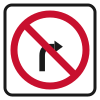
This sign is posted at a crossroad. Which move may you not make?
Question 4 of 65Road signs
A sign in bright yellow-green is most likely to warn of:
Question 5 of 65Road signs

Where would you expect to see this sign?
Question 6 of 65Road signs
A sign over a lane says "RIGHT LANE MUST TURN RIGHT". You are in that lane. What must you do?
Question 7 of 65Road signs
A school zone sign has a plaque that says "WHEN FLASHING". What does it mean?
Question 8 of 65Road signs
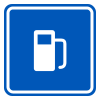
What does this blue sign beside the highway tell you?
Question 9 of 65Road signs
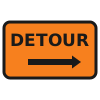
What does this sign tell you to do?
Question 10 of 65Road signs
Signs that are wider than they are tall, in green, usually:
Question 11 of 65Road signs
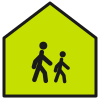
What does this sign tell you?
Question 12 of 65Road signs
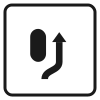
What does this sign tell you to do?
Question 13 of 65Road signs
You pass a sign that says "END ROAD WORK". What does it mean?
Question 14 of 65Road signs

What does this round yellow sign warn you about?
Question 15 of 65Road signs
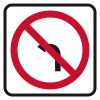
What is not allowed where this sign is posted?
Question 16 of 65Rules of the road · Right of way
A school bus ahead of you has flashing yellow lights. What does this mean?
Question 17 of 65Rules of the road · Licensing and insurance
In Wisconsin, you drive a friend's car. Whose job is it to make sure the car is insured?
Question 18 of 65Rules of the road · Turning, passing and lanes
You are waiting to turn left with oncoming traffic. How should you hold your front wheels?
Question 19 of 65Rules of the road · Alcohol, drugs and penalties
What kind of drug is alcohol?
Question 20 of 65Rules of the road · Speed and following distance
You are going too fast as you enter a curve. What is the best thing to do?
Question 21 of 65Rules of the road · Safe driving and hazards
Your car starts to hydroplane on a wet road. What should you do?
Question 22 of 65Rules of the road · Turning, passing and lanes
To make a right turn, where should your car be?
Question 23 of 65Rules of the road · Parking and stopping
In Wisconsin, when should parking lights be used by themselves?
Question 24 of 65Rules of the road · Alcohol, drugs and penalties
A medicine label says "Do not operate heavy machinery." What should you do?
Question 25 of 65Rules of the road · Turning, passing and lanes
According to the Wisconsin handbook, when may you use a paved shoulder to go around another car?
Question 26 of 65Rules of the road · Alcohol, drugs and penalties
What does eating a large meal before drinking do?
Question 27 of 65Rules of the road · Right of way
You are pulling out of a driveway onto a street. Who must you yield to?
Question 28 of 65Rules of the road · Safe driving and hazards
How should you use the gas and brakes on snow?
Question 29 of 65Rules of the road · Alcohol, drugs and penalties
In nearly every state, what is the legal blood alcohol limit for drivers 21 and over?
Question 30 of 65Rules of the road · Right of way
When you enter a roundabout, who has the right-of-way?
Question 31 of 65Rules of the road · Speed and following distance
Why does it usually take longer to stop when you are going downhill?
Question 32 of 65Rules of the road · Sharing the road
An orange triangle with a red border on the back of a vehicle means:
Question 33 of 65Rules of the road · Sharing the road
A large truck ahead is signaling a right turn and has swung left. What should you do?
Question 34 of 65Rules of the road · Parking and stopping
The Wisconsin handbook says how far to stay from the cars ahead and behind after you parallel park. How far?
Question 35 of 65Rules of the road · Right of way
You want to make a U-turn where it is legal. Who must you yield to?
Question 36 of 65Rules of the road · Alcohol, drugs and penalties
What is a likely result of driving while your license is suspended?
Question 37 of 65Rules of the road · Signals and pavement markings
A traffic light shows a steady red light and a green arrow pointing right. What may you do?
Question 38 of 65Rules of the road · Signals and pavement markings
You reach an intersection where the traffic lights are not working at all. In general, what should you do?
Question 39 of 65Rules of the road · Speed and following distance
The road is wet from rain. What should you do?
Question 40 of 65Rules of the road · Alcohol, drugs and penalties
What is the only thing that sobers up a person who has been drinking?
Question 41 of 65Rules of the road · Alcohol, drugs and penalties
Your friend has been drinking and wants to drive you home. What should you do?
Question 42 of 65Rules of the road · Right of way
A school bus is stopped with red lights flashing and its stop arm out on a two-lane road. What must you do?
Question 43 of 65Rules of the road · Licensing and insurance
A Wisconsin permit holder wants to practice after dark. Who must sit in the seat beside them?
Question 44 of 65Rules of the road · Signals and pavement markings
Arrows painted in your lane show:
Question 45 of 65Rules of the road · Safe driving and hazards
Why should you keep your windshield clean?
Question 46 of 65Rules of the road · Signals and pavement markings
A broken yellow line is on your side of the center. What does it mean?
Question 47 of 65Rules of the road · Parking and stopping
Why should you not park next to a fire hydrant?
Question 48 of 65Rules of the road · Safe driving and hazards
Where is ice most likely to form first?
Question 49 of 65Rules of the road · Right of way
Another car is passing you on a two-lane road. What should you do?
Question 50 of 65Rules of the road · Alcohol, drugs and penalties
In Wisconsin, how many demerit points within any 12-month period cost you your driving privilege?
Question 51 of 65Rules of the road · Right of way
You arrive at a T-intersection at the same time as a car on the through road to your right. Who goes first?
Question 52 of 65Rules of the road · Emergencies and equipment
When should you adjust your seat and mirrors?
Question 53 of 65Rules of the road · Parking and stopping
How should you back out of an angled parking space?
Question 54 of 65Rules of the road · Safe driving and hazards
When should you turn on your headlights?
Question 55 of 65Rules of the road · Alcohol, drugs and penalties
In Wisconsin, what alcohol concentration is allowed for a driver under 21?
Question 56 of 65Rules of the road · Signals and pavement markings
What does a steady green light mean?
Question 57 of 65Rules of the road · Alcohol, drugs and penalties
How do the alcohol rules for drivers under 21 compare with those for adults?
Question 58 of 65Rules of the road · Speed and following distance
A tailgater is behind you and you need to stop ahead. What should you do?
Question 59 of 65Rules of the road · Signals and pavement markings
The light is green, but traffic is backed up on the far side of the intersection. What should you do?
Question 60 of 65Rules of the road · Safe driving and hazards
Water is flowing across the road ahead. What should you do?
Question 61 of 65Rules of the road · Alcohol, drugs and penalties
In most states, what must you be able to show if police ask after a crash or stop?
Question 62 of 65Rules of the road · Alcohol, drugs and penalties
In Wisconsin, what happens if you refuse a police officer's request for an alcohol (PAC) test?
Question 63 of 65Rules of the road · Sharing the road
You stop behind a large truck on an uphill slope. Why should you leave extra space?
Question 64 of 65Rules of the road · Turning, passing and lanes
On a highway with several lanes, which lane should slower traffic use?
Question 65 of 65Rules of the road · Right of way
Your light turns green, but an ambulance with flashing lights and a siren is coming. What should you do?
1 of 65
Answer each question to see the explanation. Keyboard: A–D or 1–4 to answer, N next, P previous.
Answers and explanations (text version)
The correct answer to each question above, why it is right, and where it comes from. Try the test first.
Question 1: A. A no-passing zone
The pennant shape is used only to mark the start of a no-passing zone.
Handbook: Chapter: Traffic signs — Sign shapes and colors
Question 2: B. Before you enter the intersection, where you can see
With no stop line or crosswalk, stop before you enter the intersection at a point where you can see traffic coming.
Handbook: Chapter: Traffic signs — Regulatory signs
Question 3: B. A right turn
This sign bans right turns at that spot, so you must go straight or turn left if allowed.
Handbook: Chapter: Traffic signs — Regulatory signs
Question 4: D. A school, people walking, or bikes
Bright yellow-green is used for school, pedestrian and bicycle warning signs because it is easy to see.
Handbook: Chapter: Traffic signs — Sign shapes and colors
Question 5: A. On the outside edge of a sharp curve
Chevron signs are placed on the outside of a sharp curve and point the way to steer.
Handbook: Chapter: Traffic signs — Warning signs
Question 6: B. Turn right at the intersection
This sign means every vehicle in the right lane must turn right at the intersection.
Handbook: Chapter: Traffic signs — Regulatory signs
Question 7: C. The lower limit applies while lights flash
With a "when flashing" plaque, the lower school speed limit applies while the yellow lights are flashing.
Handbook: Chapter: Traffic signs — Regulatory signs
Question 8: A. Fuel is available at or near the next exit
Blue signs show services for drivers. A gas pump symbol means fuel is available near the next exit.
Handbook: Chapter: Traffic signs — Guide and service signs
Question 9: C. Follow the signs around a closed road
A detour sign leads you around a closed road. Follow the detour signs to get back on your route.
Handbook: Chapter: Traffic signs — Work zone signs
Question 10: B. Give directions and distances
Green horizontal signs are guide signs. They show directions, distances and exits.
Handbook: Chapter: Traffic signs — Sign shapes and colors
Question 11: C. A school is near and children may cross
This school sign means a school is near and children may be crossing. Slow down and obey any school speed limit.
Handbook: Chapter: Traffic signs — Warning signs
Question 12: C. Pass to the right of the island ahead
A keep right sign means you must pass to the right of the island, divider or object ahead.
Handbook: Chapter: Traffic signs — Regulatory signs
Question 13: B. You have left the work zone
The end road work sign tells you that you have left the work zone and normal rules apply again.
Handbook: Chapter: Traffic signs — Work zone signs
Question 14: D. A railroad crossing is ahead
The round yellow sign with an X warns of a railroad crossing ahead. Slow down, look and listen for trains.
Handbook: Chapter: Traffic signs — Warning signs
Question 15: D. Turning left
This sign bans left turns. You may go straight or turn right if those moves are allowed.
Handbook: Chapter: Traffic signs — Regulatory signs
Question 16: C. It is getting ready to stop
Flashing yellow lights mean the bus is about to stop. Slow down and get ready to stop.
Handbook: Chapter: Right of way — School buses
Question 17: B. Yours, as the driver
In Wisconsin the driver must check: "If you are driving someone else's car, it is your job to make sure it has insurance."
Handbook: Section 12: Other Important Information — E. Insurance Requirements
Question 18: A. Straight ahead until you start to turn
Keep the wheels straight. If you are hit from behind, you will not be pushed into oncoming traffic.
Handbook: Chapter: Turning, passing and lane use — Turns
Question 19: B. A depressant that slows the brain
Alcohol is a depressant. It slows the brain and the body's reactions.
Handbook: Chapter: Alcohol, drugs and penalties — How alcohol affects you
Question 20: D. Ease off the gas and steer smoothly through it
If you enter a curve too fast, ease off the gas and steer smoothly. Hard braking in a curve can cause a skid.
Handbook: Chapter: Speed and following distance — Speed and road conditions
Question 21: A. Ease off the gas and keep the wheel straight
If you hydroplane, ease off the gas and keep the wheel straight until the tires grip again. Do not brake hard.
Handbook: Chapter: Safe driving and hazards — Skids and slippery roads
Question 22: D. In the right lane, close to the curb
Start a right turn from the right lane, close to the curb, and turn into the right lane of the new road.
Handbook: Chapter: Turning, passing and lane use — Turns
Question 23: A. Only when parked and idling
Wisconsin says "Parking Lights should only be used when you are parked and idling."
Handbook: Section 3: The Basics — K. Communication
Question 24: D. Do not drive until you know how it affects you
A car counts as heavy machinery. Do not drive until you know how the medicine affects you.
Handbook: Chapter: Alcohol, drugs and penalties — Drugs and medicine
Question 25: D. Only if it is stopped or turning left
Wisconsin lets you use a paved shoulder to go around a car "only if they are stopped or making a left turn."
Handbook: Section 3: The Basics — H. Passing
Question 26: C. It slows how fast alcohol is absorbed
Food slows how fast alcohol is absorbed, but it does not stop you from becoming impaired.
Handbook: Chapter: Alcohol, drugs and penalties — How alcohol affects you
Question 27: C. All traffic and people walking
When entering a street from a driveway or alley, yield to all traffic on the street and to people on the sidewalk.
Handbook: Chapter: Right of way — Entering a roadway
Question 28: A. Gently and smoothly
Use the gas and brakes gently and smoothly on snow so the tires keep their grip.
Handbook: Chapter: Safe driving and hazards — Skids and slippery roads
Question 29: A. 0.08 percent
In nearly every state the limit for drivers 21 and over is 0.08 percent; a state may set it lower.
Handbook: Chapter: Alcohol, drugs and penalties — Legal limits
Question 30: C. Traffic already in the roundabout
Yield to traffic already in the roundabout, and enter when there is a safe gap.
Handbook: Chapter: Right of way — Roundabouts
Question 31: A. Gravity keeps pulling the car forward
Going downhill, gravity keeps pulling the car forward, so it takes longer to stop; slow down and leave more space.
Handbook: Chapter: Speed and following distance — Stopping distance
Question 32: B. It is a slow-moving vehicle
An orange triangle with a red border marks a slow-moving vehicle, such as a tractor.
Handbook: Chapter: Sharing the road — Slow-moving vehicles
Question 33: C. Stay back and do not pass on the right
Trucks swing wide to make right turns. Stay back and never try to pass on the right.
Handbook: Chapter: Sharing the road — Large trucks and buses
Question 34: B. At least 2 feet
Wisconsin says to be "at least 2 feet away from the vehicle in front of you and behind you."
Handbook: Section 3: The Basics — J. Parking
Question 35: D. All other traffic and pedestrians
A driver making a U-turn must yield to all other traffic and to pedestrians.
Handbook: Chapter: Right of way — Turning at intersections
Question 36: C. More fines and a longer suspension or jail
Driving while suspended usually leads to more fines, a longer suspension, and possibly jail.
Handbook: Chapter: Alcohol, drugs and penalties — Penalties
Question 37: A. Turn right with care, yielding to people crossing
A green arrow lets you turn right even while the red light is on, but you must still yield to people crossing and cars already in the intersection.
Handbook: Chapter: Traffic signals and pavement markings — Traffic signals
Question 38: B. Treat it as an all-way stop
In general, when signals are dark, treat the intersection as an all-way stop and take turns going.
Handbook: Chapter: Traffic signals and pavement markings — Traffic signals
Question 39: B. Slow down and leave more space
Wet roads give your tires less grip, so slow down and leave more space ahead.
Handbook: Chapter: Speed and following distance — Speed and road conditions
Question 40: C. Time
Only time lets the body remove alcohol. Coffee, cold showers and fresh air do not lower your blood alcohol.
Handbook: Chapter: Alcohol, drugs and penalties — How alcohol affects you
Question 41: A. Find another way home, like a sober driver
Never ride with a driver who has been drinking. Find a sober driver or another safe way home.
Handbook: Chapter: Alcohol, drugs and penalties — Making safe choices
Question 42: D. Stop, whichever way you are going
On a two-lane road, traffic going both ways must stop for a school bus with flashing red lights and its stop arm out.
Handbook: Chapter: Right of way — School buses
Question 43: C. An instructor or a licensed person 25 or older
After dark, Wisconsin requires "a qualified instructor or a licensed person 25 years of age" with two years of driving.
Handbook: Section 2: Progression of Licenses — B. Instruction Permit
Question 44: C. Which way traffic in that lane may go
Lane arrows show which way traffic in that lane may go, such as straight or left only.
Handbook: Chapter: Traffic signals and pavement markings — Pavement markings
Question 45: A. Dirt and glare make it harder to see
A dirty windshield adds glare and makes it harder to see, most of all at night.
Handbook: Chapter: Safe driving and hazards — Night and weather
Question 46: D. You may pass when it is safe
A broken yellow line on your side means you may cross it to pass when it is safe to do so.
Handbook: Chapter: Traffic signals and pavement markings — Pavement markings
Question 47: D. Fire crews need to reach it quickly
Fire crews need fast access to a hydrant, so do not park next to one; check your state for the exact distance.
Handbook: Chapter: Parking and stopping — Where not to park
Question 48: C. On bridges and overpasses
Bridges and overpasses lose heat from above and below, so ice forms on them first.
Handbook: Chapter: Safe driving and hazards — Skids and slippery roads
Question 49: D. Stay right and do not speed up
When you are being passed, keep to the right and hold or ease your speed so the other driver can finish passing safely.
Handbook: Chapter: Right of way — Right-of-way basics
Question 50: C. 12 or more
In Wisconsin, if you get "12 or more demerit points within any 12-month period," your privilege is suspended or revoked.
Handbook: Section 11: Your Driving Privilege — A. Point System
Question 51: C. The car on the through road
At a T-intersection, the driver on the road that ends yields to traffic on the through road, whatever its side.
Handbook: Chapter: Right of way — Uncontrolled intersections
Question 52: B. Before you start to drive
Adjust your seat and mirrors before you start to drive, so you can see well and are not distracted on the road.
Handbook: Chapter: Emergencies and vehicle equipment — Vehicle equipment
Question 53: C. Slowly, looking all around you
Back out slowly and look all around. Your view may be blocked by the cars next to you.
Handbook: Chapter: Parking and stopping — Angle parking
Question 54: B. Any time it is hard to see
Turn on your headlights any time it is hard to see, such as at dusk, in rain or in fog.
Handbook: Chapter: Safe driving and hazards — Night and weather
Question 55: A. 0.00%
In Wisconsin "the legal alcohol concentration allowed for drivers under the age of 21 is 0.00%."
Handbook: Section 9: Dangerous Driving Behaviors — A. Alcohol, Drugs and Driving
Question 56: C. Go if the way is clear, yielding as needed
A green light means you may go, but only when the way is clear. You must still yield to people and cars already in the intersection.
Handbook: Chapter: Traffic signals and pavement markings — Traffic signals
Question 57: D. They are stricter, with a very low limit
Every state has a zero-tolerance law, so the limit for drivers under 21 is stricter: very low or zero.
Handbook: Chapter: Alcohol, drugs and penalties — Legal limits
Question 58: A. Brake early and gently
Brake early and gently to give the tailgater time to notice and slow down.
Handbook: Chapter: Speed and following distance — Following distance
Question 59: B. Wait until there is room to clear the intersection
Do not enter an intersection unless there is room to clear it, even on green. Blocking it holds up cross traffic.
Handbook: Chapter: Traffic signals and pavement markings — Traffic signals
Question 60: C. Turn around and find another way
Never drive into flowing water. Even shallow water can sweep a car away, so turn around.
Handbook: Chapter: Safe driving and hazards — Night and weather
Question 61: B. Proof of insurance
In most states you must carry proof of insurance or financial responsibility and show it when asked.
Handbook: Chapter: Alcohol, drugs and penalties — Licensing rules
Question 62: B. You lose your privileges for at least one year
If you refuse in Wisconsin, "you will lose your driving privileges for at least one year."
Handbook: Section 9: Dangerous Driving Behaviors — A. Alcohol, Drugs and Driving
Question 63: A. It may roll back when it starts to move
A large truck may roll back a little as it starts on a hill, so leave extra space in front of you.
Handbook: Chapter: Sharing the road — Large trucks and buses
Question 64: B. The right lane
Slower traffic should keep to the right lane so faster cars can pass on the left.
Handbook: Chapter: Turning, passing and lane use — Lane use
Question 65: A. Stay stopped and let it go by
A green light does not let you go when an emergency vehicle with a siren is coming. Stay where you are and let it pass.
Handbook: Chapter: Right of way — Emergency vehicles
Practice test 2 of 10 for the Class D knowledge test and highway signs test (instruction permit) (Wisconsin DMV): 65 questions · 52 of 65 (12 of 15 road signs and 40 of 50 rules of the road) to pass · no time limit.