Question 1 of 32Signs and markings
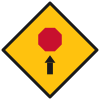
Question 1 of 32Signs and markings
Question 2 of 32Road rules
Question 3 of 32Road rules
Question 4 of 32Learner and P-plate rules
Question 5 of 32Hazards and sharing the road
Question 6 of 32Signs and markings
Question 7 of 32Road rules
Question 8 of 32Signs and markings
Question 9 of 32Signs and markings
Question 10 of 32Learner and P-plate rules
Question 11 of 32Hazards and sharing the road
Question 12 of 32Road rules
Question 13 of 32Learner and P-plate rules
Question 14 of 32Hazards and sharing the road
Question 15 of 32Hazards and sharing the road
Question 16 of 32Road rules
Question 17 of 32Safe driving
Question 18 of 32Learner and P-plate rules
Question 19 of 32Learner and P-plate rules
Question 20 of 32Road rules
Question 21 of 32Signs and markings
Question 22 of 32Road rules
Question 23 of 32Learner and P-plate rules
Question 24 of 32Hazards and sharing the road
Question 25 of 32Signs and markings
Question 26 of 32Hazards and sharing the road
Question 27 of 32Hazards and sharing the road
Question 28 of 32Signs and markings

Question 29 of 32Safe driving
Question 30 of 32Hazards and sharing the road
Question 31 of 32Road rules
Question 32 of 32Road rules
Answer each question to see the explanation. Keyboard: A–D or 1–4 to answer, N next, P previous.
The correct answer to each question above, why it is right, and where it comes from. Try the test first.
Question 1: C. Slow down and prepare to stop
This warning sign tells you a Stop sign is ahead, so slow down and prepare to stop completely at it.
Handbook: Ch 4 Rules and responsibilities — Road signs: intersection control warning signs (p. 87)
Question 2: B. 50 km/h
In a built-up area the speed limit is 50 km/h unless a sign shows a different limit.
Handbook: Ch 4 Rules and responsibilities — Speed limits: built-up areas (p. 79)
Question 3: A. Avoid speeding up
You must avoid speeding up while someone is overtaking you; the rule says you must not increase your speed.
Handbook: Ch 4 Rules and responsibilities — How to overtake safely (p. 130)
Question 4: A. No, learners must not tow
In Victoria, learner drivers must not tow a trailer or another vehicle, and may only drive a car.
Handbook: The 10 steps to getting your licence — Step 5: Learner permit restrictions (p. 15)
Question 5: D. Yes, up to 1.5 metres apart
Bicycle riders may legally ride two abreast, up to 1.5 metres apart, which makes them easier to see.
Handbook: Ch 4 Rules and responsibilities — Sharing the road with bicycle riders and motorcyclists (p. 137)
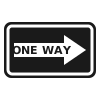
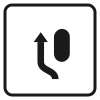
Question 6: A. Close to the right side of the road
When turning from a one-way road into a two-way road, turn from a position close to the side you are turning towards, so the right side for a right turn.
Handbook: Ch 4 Rules and responsibilities — Turning: turning and one way roads (p. 118)
Question 7: B. All vehicles and pedestrians
When you enter a road from a driveway or other land, you must give way to all vehicles and pedestrians.
Handbook: Ch 4 Rules and responsibilities — Give Way rules: entering the road (p. 109)
Question 8: A. The lane is closed ahead; move over
A downward arrow pointing to one side means the lane is closed ahead, so change lanes that way when it is safe.
Handbook: Ch 4 Rules and responsibilities — Road markings: overhead lane signals (p. 93)
Question 9: A. At the first stop line
Facing a red light at a bicycle storage area, you must stop at the first stop line and not enter the bicycle area until the light changes.
Handbook: Ch 4 Rules and responsibilities — Road markings: bicycle storage area (p. 96)
Question 10: D. No, drinking while supervising is illegal
In Victoria, it is illegal to drink alcohol while supervising a learner driver, even if the supervisor's BAC stays low.
Handbook: Ch 4 Rules and responsibilities — Alcohol (p. 71)
Question 11: C. 1.5 metres
On roads with a speed limit above 60 km/h, the gap when passing a bicycle rider must be at least 1.5 metres.
Handbook: Ch 4 Rules and responsibilities — How to overtake safely (p. 131)
Question 12: D. Only when there is room for you on the far side
Do not enter a level crossing unless there is room for your car on the other side, or you could be stuck on the tracks.
Handbook: Ch 4 Rules and responsibilities — Railway level crossings (p. 145)
Question 13: D. Set up before driving, in a fixed holder
In Victoria, learners and P drivers may use a phone for navigation only if it is set up before driving and mounted in a commercial holder.
Handbook: Ch 3 Managing risk — Mobile phones and other electronic devices (p. 53)
Question 14: A. Stop and wait
Twin flashing red lights, such as outside a fire or ambulance station, mean you must stop and wait.
Handbook: Ch 4 Rules and responsibilities — Sharing the road with police and emergency vehicles (p. 141)
Question 15: D. In fog or other hazardous weather
Fog lights may only be used in fog or hazardous weather, as they can dazzle other drivers at other times.
Handbook: Ch 4 Rules and responsibilities — Using emergency signals (p. 129)
Question 16: C. Stop, unless you cannot stop safely
A yellow light means you must stop, unless you are so close that you cannot stop safely.
Handbook: Ch 4 Rules and responsibilities — Traffic controls at intersections: traffic lights (p. 98)
Question 17: D. Missing important road signs
Cannabis can slow your responses, reduce concentration and make you miss important road signs.
Handbook: Ch 4 Rules and responsibilities — Drugs, medicine and driving (p. 75)
Question 18: A. The test stops and you fail
In Victoria, if you do something unsafe in the drive test, the test is stopped and you fail.
Handbook: The 10 steps to getting your licence — Step 7: Pass your probationary licence test (p. 20)
Question 19: C. 3 years
In Victoria, the P2 (green P) licence period lasts at least 3 years before you can get a full licence.
Handbook: The 10 steps to getting your licence — Step 8: Pay for and be granted your probationary licence (p. 22)
Question 20: D. Use the slip lane to make the turn
Where there is a slip lane you must use it to turn left, watching for bicycle riders going straight on your left.
Handbook: Ch 4 Rules and responsibilities — Turning: making left turns (p. 113)
Question 21: B. A regulatory sign you must obey
Keep left signs are regulatory: they tell you which way you must go, and you must obey them.
Handbook: Ch 4 Rules and responsibilities — Road signs: obey these traffic signs (p. 84)
Question 22: C. Move out of its way, stopping if needed
You must get out of the way of an emergency vehicle with its siren or flashing lights on, stopping if needed, even on a green light.
Handbook: Ch 4 Rules and responsibilities — Sharing the road with police and emergency vehicles (p. 141)
Question 23: D. A white P on a red background
In Victoria, P1 drivers display red P plates with a white letter P on the front and rear of the car.
Handbook: The 10 steps to getting your licence — P1 probationary licence (p. 22)
Question 24: D. They don't look past the car in front
New drivers' crashes are not mostly about car control. They often don't look further ahead than the car in front.
Handbook: Ch 1 The challenges of driving — Some facts about new solo driving (p. 34)
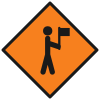
Question 25: A. Be ready to obey the hand-held sign
Hand-held signs are often used at work sites, so be prepared to obey the hand-held sign the worker shows.
Handbook: Ch 4 Rules and responsibilities — Road signs: hand-held signs (p. 85)
Question 26: B. Do not react or retaliate
The key rule for avoiding road rage is do not retaliate. Treat it as a mistake, not a personal attack.
Handbook: Ch 4 Rules and responsibilities — Keeping your cool when driving (p. 126)
Question 27: D. Slow down and steer back gently
Pulling the wheel quickly can cause you to overcorrect. Slow down, brake gently and steer back when safe.
Handbook: Ch 4 Rules and responsibilities — Speed limits: safe speeds for different needs (p. 82)
Question 28: D. No, you may go on if it is safe
To give way means slowing, and stopping only if needed to avoid a crash, so you may go on without stopping when it is safe.
Handbook: Ch 4 Rules and responsibilities — Give Way rules: definition (p. 100)
Question 29: B. Drifting across your lane
Drifting across the lane, yawning and heavy eyes are signs of fatigue. Stop driving if you notice them.
Handbook: Ch 3 Managing risk — Fatigue (p. 57)
Question 30: C. 200 metres
You must dip to low beam when you are within 200 metres behind another vehicle, as well as for oncoming traffic.
Handbook: Ch 4 Rules and responsibilities — Sharing the road with other motorists (p. 128)
Question 31: D. As close to the left side as possible
To turn left, approach the intersection as close as possible to the left side of the road, giving way to bicycles in any bicycle lane.
Handbook: Ch 4 Rules and responsibilities — Turning: making left turns (p. 113)
Question 32: C. From your approach until you leave it
To turn left at a roundabout, signal left as you approach and keep the signal on until you have left the roundabout.
Handbook: Ch 4 Rules and responsibilities — Turning: making turns at roundabouts (p. 119)
Practice test 1 of 10 for the Learner Permit Test (VicRoads): 32 questions · 25 of 32 (78%) to pass · no time limit.