Question 1 of 20Road signs, lights and markings
Ontario road signs test: free practice with 20 sign questions.
Question 1 of 20Road signs, lights and markings
Question 2 of 20Road signs, lights and markings

Question 3 of 20Road signs, lights and markings
Question 4 of 20Parking and stopping
Question 5 of 20Road signs, lights and markings
Question 6 of 20Road signs, lights and markings
Question 7 of 20Road signs, lights and markings
Question 8 of 20Road signs, lights and markings
Question 9 of 20Road signs, lights and markings
Question 10 of 20Road signs, lights and markings
Question 11 of 20Road signs, lights and markings
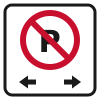
Question 12 of 20Road signs, lights and markings
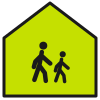
Question 13 of 20Road signs, lights and markings
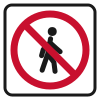
Question 14 of 20Road signs, lights and markings
Question 15 of 20Road signs, lights and markings
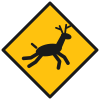
Question 16 of 20Road signs, lights and markings
Question 17 of 20Road signs, lights and markings
Question 18 of 20Road signs, lights and markings
Question 19 of 20Road signs, lights and markings
Question 20 of 20Road signs, lights and markings
Answer each question to see the explanation. Keyboard: A–D or 1–4 to answer, N next, P previous.
The correct answer to each question above, why it is right, and where it comes from. Try the test first.
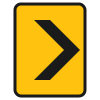
Question 1: C. To guide drivers around a sharp curve
Chevron (arrowhead) signs are posted in groups to guide drivers around sharp curves.
Handbook: Traffic Signs and Lights: Signs — Warning signs
Question 2: B. A triangle with a white background and red border
The yield sign is a triangle with a white background and a red border.
Handbook: Traffic Signs and Lights: Signs — Yield sign
Question 3: A. Let traffic in or near the intersection go first
A yield sign means you must let traffic in the intersection or close to it go first, stopping if needed.
Handbook: Traffic Signs and Lights: Signs — Yield sign
Question 4: A. School buses
School buses must stop at all railway crossings, whether or not they have gates or lights; be ready to stop behind them.
Handbook: Safe and Responsible Driving: Stopping — Stopping at railway crossings
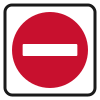
Question 5: D. You are about to go the wrong way; do not enter
Facing a do not enter sign means you would be going the wrong way; turn back and do not enter.
Handbook: Traffic Signs and Lights: Signs — Regulatory signs
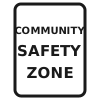
Question 6: C. Traffic fines are higher in this zone
A community safety zone has a special risk to pedestrians, and traffic offences there bring increased fines.
Handbook: Traffic Signs and Lights: Signs — Regulatory signs
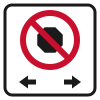
Question 7: A. No stopping
No stopping bans even a brief stop; no standing allows passenger loading; no parking also allows loading goods.
Handbook: Traffic Signs and Lights: Signs — Regulatory signs
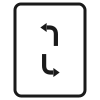
Question 8: D. No, it is for left turns only
Two-way left-turn lanes are only for turning left and must not be used for passing.
Handbook: Safe and Responsible Driving: Changing directions — Left-turn lanes
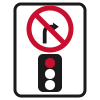
Question 9: B. Turn right once it is green and safe
The sign bans right turns only on red; on green you may turn right after yielding to pedestrians.
Handbook: Traffic Signs and Lights: Signs — Regulatory signs
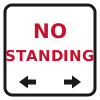
Question 10: C. No, only passengers may be loaded
No standing allows stopping only while loading or unloading passengers, not goods.
Handbook: Traffic Signs and Lights: Signs — Regulatory signs
Question 11: C. You may stop only to load or unload people or goods
No parking means you may not park, but you may stop briefly to load or unload passengers or merchandise.
Handbook: Traffic Signs and Lights: Signs — Regulatory signs
Question 12: B. You are coming to a school zone
The five-sided school zone sign warns that you are coming to a school zone: slow down and watch for children.
Handbook: Traffic Signs and Lights: Signs — School zone sign
Question 13: A. People on foot may not use this road
A red circle with a slash over a walking person means no pedestrians are allowed on this road.
Handbook: Traffic Signs and Lights: Signs — Regulatory signs
Question 14: A. You may stop only to load or unload passengers
No standing means you may stop between the signs only while picking up or dropping off passengers.
Handbook: Traffic Signs and Lights: Signs — Regulatory signs
Question 15: C. Deer often cross this road
Deer regularly cross this road; be alert for animals, especially at dusk and dawn.
Handbook: Traffic Signs and Lights: Signs — Warning signs
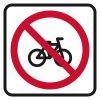
Question 16: C. Bicycles are not allowed on this road
A red circle with a slash over a bicycle means no bicycles are allowed on this road.
Handbook: Traffic Signs and Lights: Signs — Regulatory signs
Question 17: B. Fluorescent yellow-green
The five-sided school zone sign has a fluorescent yellow/green background with black symbols.
Handbook: Traffic Signs and Lights: Signs — School zone sign
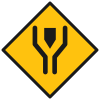
Question 18: C. The road ahead splits with a median; keep right
Divided highway begins: traffic travels on separated roads ahead, so keep to the right-hand road.
Handbook: Traffic Signs and Lights: Signs — Warning signs
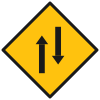
Question 19: A. Oncoming traffic will share the road ahead
This sign warns that you will share the road with oncoming traffic ahead.
Handbook: Traffic Signs and Lights: Signs — Warning signs
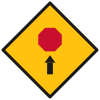
Question 20: B. A stop sign is ahead
This warning sign means there is a stop sign ahead; slow down and prepare to stop.
Handbook: Traffic Signs and Lights: Signs — Warning signs
Ontario (Canadian) road signs, traffic lights, pedestrian signals and pavement markings as shown in the 'Traffic Signs and Lights' chapter of the Official MTO Driver's Handbook; tested in a dedicated signs section. 16 correct (80%) is our practice mark, not an official pass mark.
Our own simplified drawings of the signs learners meet most. The full list, with meanings, is in the Canada sign library; the official reference is the Official MTO Driver's Handbook.
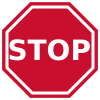
Come to a full stop at the line or crosswalk, then go only when it is safe.
Slow down or stop and let traffic on the crossing road go first.
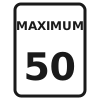
The highest speed allowed on this road.
You may not enter this road from this direction.
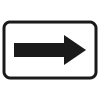
Traffic moves only in the direction of the arrow.
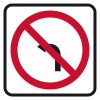
Left turns are not allowed here.
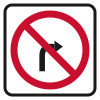
Right turns are not allowed here.
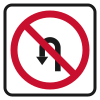
Turning around to go back the other way is not allowed here.
You may not turn right while facing a red light; wait for green.
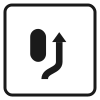
Keep to the right of the median or traffic island.
You may not stop your vehicle at all between the signs, even for a moment, during the posted times.
You may stop between the signs only while picking up or dropping off passengers.
You may not park between the signs, though you may stop briefly to load or unload passengers or goods.
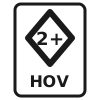
This lane is reserved for vehicles carrying at least the number of people shown.
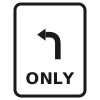
Vehicles in this lane must turn left.
The centre lane is shared by drivers from both directions for making left turns only.
Traffic fines are increased here because the area needs extra care, often near schools or parks.
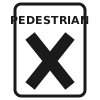
Marks a pedestrian crossover; be ready to stop and let pedestrians cross, waiting until they are completely across the road.

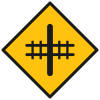
Marks the crossing itself; slow down, look both ways and stop if a train is coming.
You are near a school; slow down and watch for children.
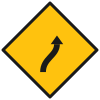
The road curves right ahead; slow down before the bend.
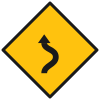
A series of curves lies ahead; drive slowly and carefully.
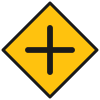
Another road crosses ahead; watch for traffic from both sides.
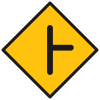
A road joins from the right ahead; watch for vehicles entering.
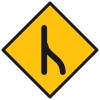
Traffic will be joining your lane from the side ahead; adjust speed to let it merge.
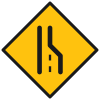
The right lane ends ahead; drivers in it must move left when safe.
A median will separate the two directions ahead; keep right.
The one-way road ends ahead and oncoming traffic shares the road.
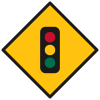
Traffic signals are ahead; be ready to stop.
A stop sign is ahead; slow down and prepare to stop.
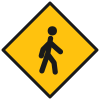
Watch for people crossing the road ahead.
Railway tracks cross the road ahead; slow down and look and listen for trains.
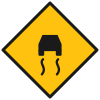
The road is slippery when wet; slow down and avoid sudden moves.
Deer often cross in this area; slow down and stay alert, especially at dusk and dawn.
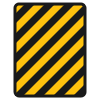
Marks an obstruction next to the road; the stripes slope down toward the side you should pass on.
Marks a sharp turn and shows which way to steer through it.
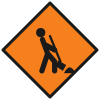
Road work is ahead; slow down, watch for workers and follow work-zone signs.
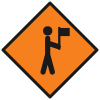
A worker with a stop/slow sign is directing traffic ahead; obey their directions.
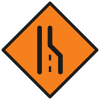
A lane is closed for work ahead; merge into the open lane early and smoothly.
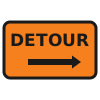
The normal route is closed; follow the detour in the direction shown.