Question 1 of 50Hazard awareness
Practice test 1 of 10 — UK (Great Britain) theory test
Practice test 1 questions
Question 2 of 50Safety and your vehicle
Where should a carrier bag be kept when you leave your car parked?
Question 3 of 50Road and traffic signs
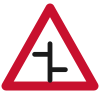
How should you drive through the junctions shown on this sign?
Question 4 of 50Rules of the road
Which of these is a place where you should not overtake?
Question 5 of 50Attitude
At the traffic lights, the driver next to you revs their engine as if to race. What should you do?
Question 6 of 50Other types of vehicle
On an unrestricted dual carriageway, a motor vehicle must use a flashing amber beacon if its top speed is no more than what?
Question 7 of 50Vehicle handling
You are driving between sunset and sunrise. Which lights must be lit as a minimum?
Question 8 of 50Other types of vehicle
A long lorry ahead signals left at a junction but first moves out to the right. What should you do?
Question 9 of 50Rules of the road
What is the national speed limit for a car on a single carriageway road?
Question 10 of 50Road and traffic signs
Apart from level crossings, where might you see a pair of red lights flashing one after the other?
Question 11 of 50Motorway rules
You need to make a phone call while on a motorway. What should you do?
Question 12 of 50Road and traffic signs
At a junction there is a Stop sign and a solid white line across the road. Where must you stop?
Question 13 of 50Vulnerable road users
A horse rider ahead signals to you to slow down. What should you do?
Question 14 of 50Vulnerable road users
At a junction, a cyclist is waiting close to the kerb to turn. What should you do?
Question 15 of 50Attitude
In a built-up area, between which times must you not sound your horn while moving, unless there is danger?
Question 16 of 50Rules of the road
You do not hold a Blue Badge. Where must you not park?
Question 17 of 50Road and traffic signs
Which colour of road stud marks the edge of the main road where a lay-by or slip road joins it?
Question 18 of 50Alertness
What does the Highway Code say about using a hands-free phone while driving?
Question 19 of 50Motorway rules
You start to feel sleepy on a long motorway journey. Where should you stop to rest?
Question 20 of 50Road and traffic signs
A road has double white lines, with the broken line on your side. For which of these reasons may you stop on it?
Question 21 of 50Road and traffic signs
A driver moves their right arm slowly up and down out of the window. What are they telling you?
Question 22 of 50Safety and your vehicle
Why should you think about your footwear before you drive?
Question 23 of 50Road and traffic signs
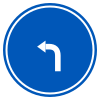
Is this blue sign with a white arrow advice or an order?
Question 24 of 50Vulnerable road users
You are about to move off from the side of the road. How should you check for cyclists?
Question 25 of 50Attitude
In which situation is merging in turn not recommended?
Question 26 of 50Safety and your vehicle
You have just filled up with fuel. What should you check before you drive off?
Question 27 of 50Motorway rules
You are joining a motorway from a slip road. Who should get priority?
Question 28 of 50Motorway rules
A works vehicle on the motorway shows the sign 'CONVOY VEHICLE NO OVERTAKING'. What must you do?
Question 29 of 50Incidents, accidents and emergencies
On a high-speed road, which is the safest place to stop if your car develops a problem?
Question 30 of 50Rules of the road
A single carriageway road has four lanes. Which lanes may you use?
Question 31 of 50Road and traffic signs
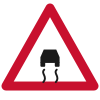
Which of these should you avoid after this sign?
Question 32 of 50Safety and your vehicle
Can a child ride in the space behind the rear seats of an estate car?
Question 33 of 50Alertness
Your phone starts ringing in its holder while you are driving. What is the safest thing to do?
Question 34 of 50Incidents, accidents and emergencies
Someone has a burn after a crash. For at least how long should you cool it with clean, cool water?
Question 35 of 50Vulnerable road users
You are waiting to join a roundabout. A cyclist is riding round it towards your entry. What should you do?
Question 36 of 50Essential documents
Your car has L plates on it, but today a full licence holder is driving it. What should you do with the plates?
Question 37 of 50Motorway rules
You are using a motorway emergency phone after a breakdown. Which way should you face?
Question 38 of 50Hazard awareness
A herd of cows is blocking the road ahead. What should you do?
Question 39 of 50Motorway rules
When may you use the hard shoulder on a motorway that has one?
Question 40 of 50Rules of the road
A bus lane has signs showing its hours of operation. When could you normally drive a car along it?
Question 41 of 50Rules of the road
You are driving a car in England on a road with street lights. No signs show a different limit. What is the speed limit?
Question 42 of 50Road and traffic signs
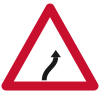
When should you slow down for the hazard this sign warns of?
Question 43 of 50Hazard awareness
You are driving across open moorland on a road with no fences. What should you look out for?
Question 44 of 50Hazard awareness
You drank alcohol at a party last night and must drive early this morning. What does the Highway Code warn?
Question 45 of 50Road and traffic signs

You have halted at this sign. When may you move off?
Question 46 of 50Incidents, accidents and emergencies
Your car breaks down on a level crossing. What should you do first?
Question 47 of 50Vehicle loading
You are towing a trailer with your car on a dual carriageway. What is the national speed limit for you?
Question 48 of 50Vehicle handling
You park on a hill in a car with an automatic gearbox. Which setting should you select?
Question 49 of 50Attitude
A driver ahead is going slowly. Why should you not flash your headlights at them?
Question 50 of 50Attitude
You are in a slow queue of traffic. Why should you leave some space in front of your car?
1 of 50
The timer starts when you answer the first question. Keyboard: A–D or 1–4 to answer, N next, P previous.
Answers and explanations (text version)
The correct answer to each question above, why it is right, and where it comes from. Try the test first.
Question 1: A. Reduce your speed in case they are hidden
On country roads, junctions and turnings may be partly hidden, so reduce your speed as you approach them.
Handbook: Highway Code rule 154
Question 2: A. With you, or locked in the boot
Take all contents with you or lock them in the boot, because a thief may think any bag holds valuables.
Handbook: Highway Code Annex 6
Question 3: C. Slowly, ready for vehicles emerging
Where there are junctions, keep your speed down and be ready for vehicles emerging from the side roads.
Handbook: Highway Code rule 146
Question 4: D. On the approach to a hump bridge
Do not overtake when approaching a hump bridge, a bend or the brow of a hill, as you cannot see far enough ahead to be sure it is safe.
Handbook: Highway Code rule 166
Question 5: D. Ignore them and drive as normal
Ignore them and drive as normal. Never show off or try to compete with other drivers, especially if they drive badly.
Handbook: Highway Code Annex 8
Question 6: A. 25 mph
On unrestricted dual carriageways, slow vehicles such as tractors with a top speed of 25 mph or less must use a flashing amber beacon.
Handbook: Highway Code rule 225
Question 7: C. Sidelights and rear number plate lights
Between sunset and sunrise you must make sure all sidelights and rear number plate lights are lit.
Handbook: Highway Code rule 113
Question 8: D. Hold back and give it room to turn
Large vehicles may need extra road space to turn. Be ready to stop and give the lorry the room and time it needs to turn.
Handbook: Highway Code rule 221
Question 9: C. 60 mph
The national limit for a car on a single carriageway is 60 mph. The 70 mph limit is for dual carriageways and motorways.
Handbook: Highway Code rule 124
Question 10: B. Outside a fire station
Red lights flashing in turn mean you must stop. As well as level crossings, they are used at lifting bridges, airfields and fire stations.
Handbook: Highway Code: Light signals controlling traffic
Question 11: C. Wait until you reach a service area
Do not stop on any part of a motorway to make or take a phone call, except in an emergency. Wait until you reach a service area.
Handbook: Highway Code rules 271, 262
Question 12: B. Behind the white line
At a Stop sign you must stop behind the solid white line, then wait for a safe gap before you move off.
Handbook: Highway Code rule 171
Question 13: D. Slow down or stop as asked
Look out for horse riders' signals and do as they ask, slowing down or stopping when requested.
Handbook: Highway Code rule 215
Question 14: D. Stay behind them and wait
Stay behind cyclists, horse riders and motorcyclists at junctions, even if they are waiting to turn close to the kerb.
Handbook: Highway Code rule 170
Question 15: D. 11.30 pm and 7.00 am
In a built-up area you must not use your horn between 11.30 pm and 7.00 am, unless another road user poses a danger.
Handbook: Highway Code rule 112
Question 16: B. In a bay for Blue Badge holders
You must not park in spaces kept for certain users, such as Blue Badge holders, unless you are entitled to.
Handbook: Highway Code rule 241
Question 17: C. Green studs
Green studs show the edge of the main carriageway at lay-bys and slip roads, so you can see where they join at night.
Handbook: Highway Code rule 132
Question 18: A. It can still distract you from the road
Even hands-free equipment is likely to distract you from the road. It is far safer to stop somewhere safe before using any phone.
Handbook: Highway Code rule 149
Question 19: B. At a service area
Do not stop on the hard shoulder or in an emergency area to rest. Leave at a service area and take a proper break.
Handbook: Highway Code rule 262
Question 20: B. To let a passenger get in or out
You must not stop or park on a road with double white lines, even with the broken line on your side, except for a passenger or to load or unload.
Handbook: Highway Code rule 240
Question 21: D. They intend to slow down or stop
Moving the right arm up and down out of the window is the arm signal for slowing down or stopping.
Handbook: Highway Code: Signals to other road users
Question 22: A. It must let you use the pedals properly
Make sure your clothing and footwear do not stop you using the controls, such as the pedals, properly.
Handbook: Highway Code rule 97
Question 23: C. An order you must obey
Blue circular signs give orders, and you must obey all traffic signs that give orders.
Handbook: Highway Code rule 109
Question 24: A. Use your mirrors and check blind spots
Cyclists can be hard to see, so check your mirrors and blind spots carefully before moving off.
Handbook: Highway Code rule 211
Question 25: B. When traffic is moving at high speed
Merging in turn suits traffic moving very slowly, but it is not recommended at high speed.
Handbook: Highway Code rule 134
Question 26: A. That the fuel cap is fastened securely
Do not overfill the tank, and make sure the fuel cap is fastened securely with its seal in good condition.
Handbook: Highway Code Annex 6
Question 27: C. Traffic already on the motorway
When you join a motorway, give priority to traffic already on the motorway and fit safely into the flow.
Handbook: Highway Code rule 259
Question 28: D. Stay behind it and do not pass
Where a vehicle shows 'CONVOY VEHICLE NO OVERTAKING', you must not pass it. Stay behind it until it leaves.
Handbook: Highway Code rule 289
Question 29: A. A service area
On motorways and other high-speed roads, a service area is the safest place to stop. Hard shoulders give less protection.
Handbook: Highway Code rule 275
Question 30: C. Only those that signs or markings show
Where a single carriageway has four or more lanes, use only the lanes that signs or markings show you may use.
Handbook: Highway Code rule 136
Question 31: D. Harsh braking and steering
On a slippery surface, avoid harsh braking and steering, which can cause a skid.
Handbook: Highway Code rule 119
Question 32: C. Only if a special child seat is fitted there
Children should not sit behind the rear seats of an estate car or hatchback unless a special child seat has been fitted.
Handbook: Highway Code rule 102
Question 33: D. Let it ring and listen to messages later
It is far safer not to use any phone while driving. Let it ring, and listen to messages once you have stopped safely.
Handbook: Highway Code rule 149
Question 34: D. 20 minutes
Cool a burn with plenty of clean, cool water for at least 20 minutes, then cover it with cling film if you have some.
Handbook: Highway Code Annex 7
Question 35: D. Wait for them to pass before you join
Stop and wait for a safe gap when cyclists are travelling around a roundabout, and let them pass before you join.
Handbook: Highway Code rule H3
Question 36: C. Remove or cover them
L plates should be removed or covered when the car is not being driven by a learner, except on driving school cars.
Handbook: Highway Code Annex 3
Question 37: B. Towards the oncoming traffic
Face the oncoming traffic when you use the emergency phone, so you can see any vehicles or debris coming towards you.
Handbook: Highway Code rule 277
Question 38: A. Stop and switch off your engine
If a herd of animals blocks the road, stop and switch off your engine until they have left the road.
Handbook: Highway Code rule 214
Question 39: A. In an emergency, or when told to
You must not use the hard shoulder except in an emergency, or when told to by the police, traffic officers or a sign.
Handbook: Highway Code rule 269
Question 40: D. Outside its hours of operation
Unless signs say otherwise, you should not drive in a bus lane during its hours of operation. Outside those hours you may use it.
Handbook: Highway Code rule 141
Question 41: B. 30 mph
In England, a 30 mph limit generally applies on roads with street lights, other than motorways, unless signs show otherwise.
Handbook: Highway Code rule 124
Question 42: B. Before you reach the bend
Reduce your speed before you reach the bend, as bends can be sharper than they look.
Handbook: Highway Code rule 154
Question 43: B. Animals wandering onto the road
Watch out for animals on unfenced roads, as they may wander into your path at any time.
Handbook: Highway Code rule 214
Question 44: A. You could still be unfit to drive
Alcohol takes time to leave your body, so you could still be unfit to drive in the morning after drinking the evening before.
Handbook: Highway Code rule 95
Question 45: A. When there is a safe gap in the traffic
After stopping you wait for a safe gap in the traffic on the main road before moving off.
Handbook: Highway Code rule 171
Question 46: B. Get everyone out and clear of the crossing
Get everyone out of the vehicle and clear of the crossing straight away, then tell the signal operator.
Handbook: Highway Code rule 299
Question 47: C. 60 mph
A car towing a caravan or trailer has a 60 mph limit on dual carriageways and motorways.
Handbook: Highway Code rules 98, 124
Question 48: C. Park
When you park on a hill in an automatic car, use 'park' and apply the handbrake firmly.
Handbook: Highway Code rule 252
Question 49: B. Flashing must not be used to intimidate
Do not flash your headlights to send messages or to intimidate others. It should only tell them you are there.
Handbook: Highway Code rule 110
Question 50: C. So you can move aside for an emergency vehicle
In slow traffic, leave enough space to move if the car ahead breaks down or an emergency vehicle needs to get past.
Handbook: Highway Code rule 151
Practice test 1 of 10 for the Car theory test (DVSA): 50 questions · 43 of 50 (86%) to pass · 57 minutes.